Why Hong Kong?
Mediation is a future-looking alternative dispute resolution mechanism that fosters understanding and collaboration. With the establishment of its headquarters in Hong Kong, the International Organization for Mediation (IOMed) provides friendly, flexible, economical, and efficient mediation services for international disputes, positioning Hong Kong at the forefront of mediation. “Mediate First: Connecting the Future” —Hong Kong, as a world-class mediation hub, is set to promote mediation as the first step for resolving disputes, connecting everyone on local, regional, and global scales.
Reliable Legislative Framework
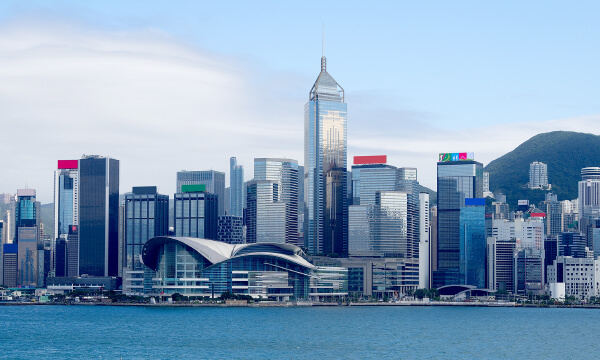
To implement the recommendations of the Working Group on Mediation headed by the Secretary for Justice, and following public consultation, the Mediation Ordinance (Cap.620) was enacted in June 2012 and came into operation on 1 January 2013. The Mediation Ordinance provides a regulatory framework for the conduct of mediation in Hong Kong without hampering the flexibility of the mediation process.
The objects of the Mediation Ordinance are to promote, encourage and facilitate the resolution of disputes by mediation, and to protect the confidential nature of mediation communications (section 3).
Click here to learn more about the Mediation Ordinance (Cap. 620)
For the purposes of the Mediation Ordinance, mediation is a structured process comprising one or more sessions in which one or more impartial individuals, without adjudicating a dispute or any aspect of it, assist the parties to a dispute to do any or all of the following including identifying the issues in dispute, exploring and generating options, communicating with one another and reaching an agreement regarding the resolution of the whole, or part, of the dispute (section 4)
The Apology Ordinance (Cap. 631) was enacted in July 2017 and came into operation on 1 December 2017.
For the purposes of the Apology Ordinance, an apology made by a person in connection with a matter means an expression of the person’s regret, sympathy or benevolence in connection with the matter, and includes an expression that the person is sorry about the matter. An apology may be oral, written or by conduct and includes any part of the expression that is an express or implied admission of that person’s fault or liability in connection with the matter or a statement of fact in connection with the matter (section 4).
The Apology Ordinance also provides that in most civil proceedings an apology does not constitute an express or implied admission of fault or liability and must not be taken into account in determining fault, liability or any other issue to the prejudice of the apology maker (section 7). Furthermore, an apology is generally not admissible as evidence for determining fault, liability or any other issue to the prejudice of the apology maker (section 8)
Click here to learn more about the Apology Ordinance (Cap. 631)
Home to Renowned Organisations and Skilled Talent
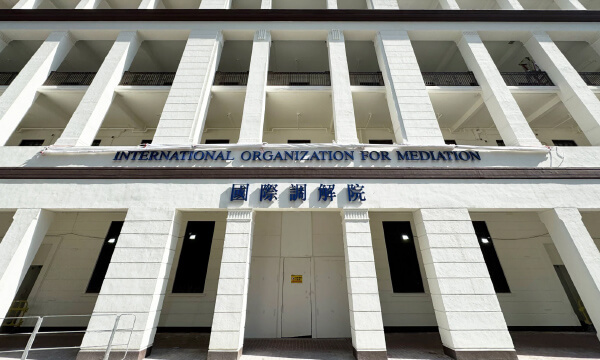
To show the emphasis and recognition Hong Kong places on the rule of law and legal related services and to consolidate and enhance Hong Kong’s status as an international centre for legal, deal-making and dispute resolution services in the Asia-Pacific region, the Hong Kong Special Administrative Region offers space in the West Wing of the former Central Government Offices (CGO), a Grade 1 historic building now known as the Justice Place, and the former French Mission Building, a declared monument nearby, and part of Two Exchange Square to accommodate offices of local, regional and international law-related organisations. Together with the offices of the Department of Justice housed in the Main and East Wings and part of the West Wing of the former CGO, the whole area forms an international Legal Hub in our central business district.
Super-connector Bridging Mainland China and the Global Markets
Leveraging its advantageous geographic and economic position, Hong Kong actively engages in high-level exchanges and cooperation with the Mainland, including through the Greater Bay Area Mediation Platform, which promotes the broader use of mediation in the region and reinforces Hong Kong’s status as a bridge between Mainland China and the world.
Strong Government Support
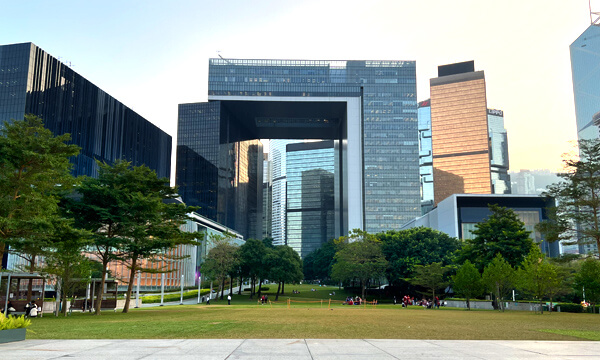
The Government is committed to deepening the mediation culture in Hong Kong, proactively spearheading initiatives that promote mediation as a preferred method of dispute resolution. For instance, mediation clauses are, as a matter of general policy, incorporated in government contracts.
Active Community Engagement
The Government has consistently engaged with communities both within and beyond Hong Kong, including through our “Mediate First” Pledge campaign since 2009, alongside a variety of events and training programmes aimed at enhancing mediation awareness and practices.